


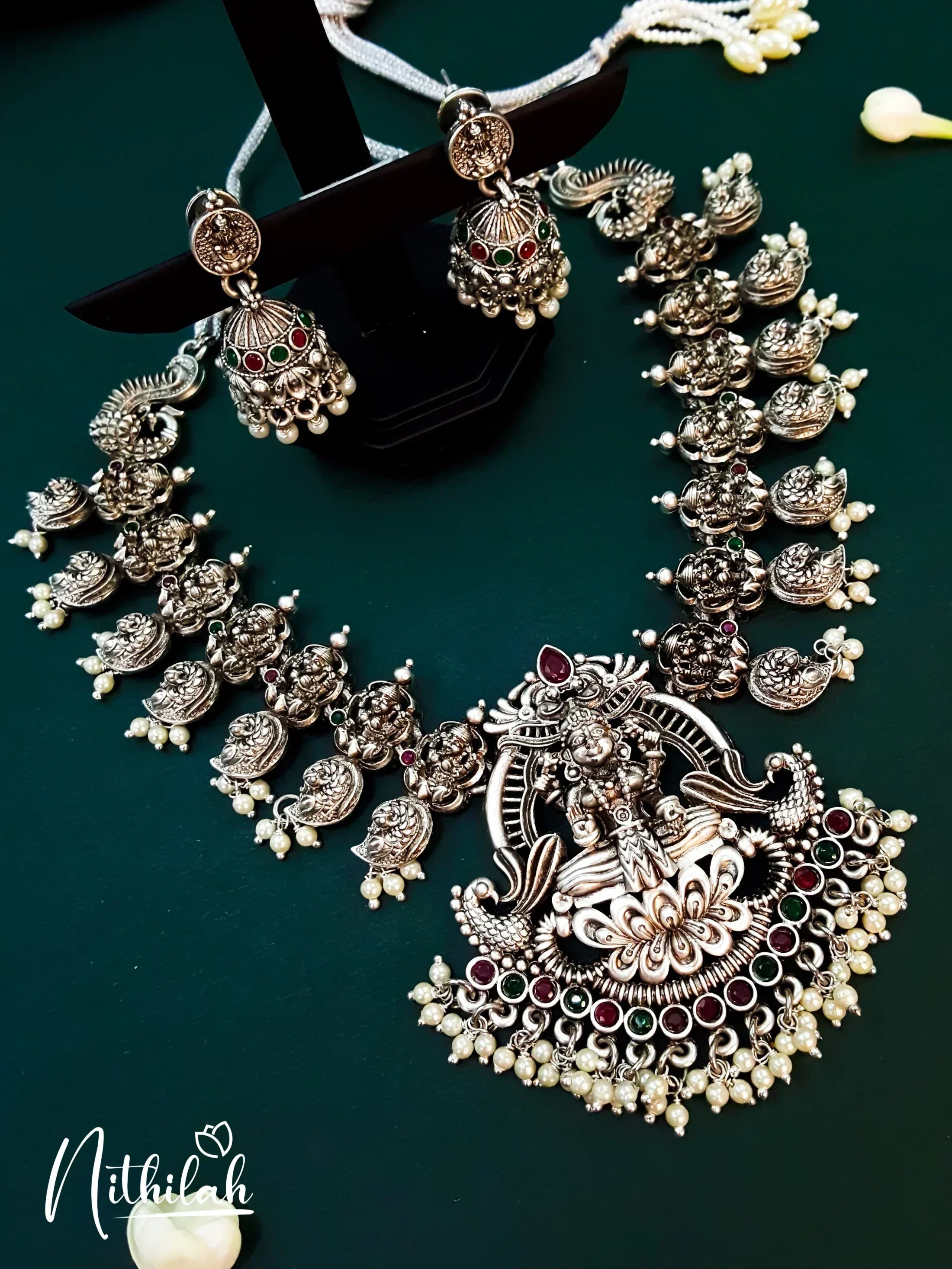
Temple Jewellery Motifs Explained: The Meaning Behind Every Design
Published: July 2023
Last Updated: July 2026
Reading Time: 6–7 min read
Written by:
Bharathi Padiyar
Founder, Nithilah
One of the things I enjoy most about sourcing Temple Jewellery is discovering the stories behind each design. Customers often admire the beauty of a necklace or pair of earrings, but many are surprised to learn that every Lakshmi motif, peacock, lotus, and elephant carries a meaning rooted in Indian tradition. I wrote this guide to share the symbolism that makes Temple Jewellery much more than beautiful ornamentation.
Introduction
Temple Jewellery is admired not only for its timeless beauty but also for the stories hidden within every design. Traditional motifs such as Goddess Lakshmi, peacocks, elephants, lotus flowers, and mango patterns have carried symbolic meanings for centuries, making every piece more meaningful than decorative jewellery alone.
From the graceful peacock to the majestic elephant and the divine image of Goddess Lakshmi, these timeless symbols represent prosperity, wisdom, beauty, and protection. Understanding their meanings adds a deeper appreciation to every jewellery piece you wear.
In this guide, we'll explore the most common Temple Jewellery motifs and the stories that have made them enduring favourites across generations.
If you're new to Temple Jewellery, you may also enjoy our guide on 10 Reasons Why Temple Jewellery Is Still So Popular Today.
⭐ In This Guide You'll Discover
✔ Meaning of Lakshmi motifs
✔ Peacock symbolism
✔ Elephant symbolism
✔ Lotus symbolism
✔ Mango motif significance
✔ Why Kemp stones are important
💎 Did You Know?
Many Temple Jewellery motifs were originally inspired by sculptures and carvings found in South Indian temples. Skilled artisans adapted these sacred designs into jewellery, preserving their symbolism while creating ornaments that could be worn and treasured for generations.
✨ Heritage Insight
Temple Jewellery is unique because it combines wearable art with meaningful symbolism. Every design reflects a tradition that has been passed down through generations, making each piece more than just an accessory.
1. Goddess Lakshmi – A Symbol of Prosperity
The most recognisable motif in Temple Jewellery is Goddess Lakshmi, the Hindu goddess of wealth, prosperity, and abundance. Her image often appears as the centrepiece of necklaces, pendants, harams, and earrings.
For centuries, Lakshmi motifs have been associated with blessings, good fortune, and auspicious beginnings. Because of its auspicious symbolism, Lakshmi motifs are traditionally chosen for weddings, religious ceremonies, and important family celebrations.
Today, Lakshmi-inspired designs continue to be cherished not only for their spiritual significance but also for their timeless elegance.
Curious how these traditional designs are created? Read our guide on How Temple Jewellery Is Made.
💡 Style Tip
Lakshmi motifs are most commonly featured as the centrepiece of necklaces, harams, pendants, and bridal jewellery, making them one of the most recognisable Temple Jewellery designs.
2. Peacock – Beauty, Grace & Prosperity
The peacock is one of the most elegant and frequently used motifs in Temple Jewellery. In Indian culture, it represents beauty, grace, prosperity, and dignity. Its vibrant feathers and majestic appearance have inspired artisans for centuries, making it a timeless decorative element in traditional jewellery.
Peacock-inspired motifs are often seen on necklace pendants, earrings, bangles, vankis, and harams. The detailed feather carvings make the peacock one of the most visually distinctive motifs found in Temple Jewellery.
The peacock's graceful appearance makes it one of the most frequently featured decorative motifs in Temple Jewellery for ceremonial and traditional designs.
If you're wondering how Temple Jewellery differs from other traditional styles, compare it with Antique Jewellery.

3. Elephant – Strength, Wisdom & Good Fortune
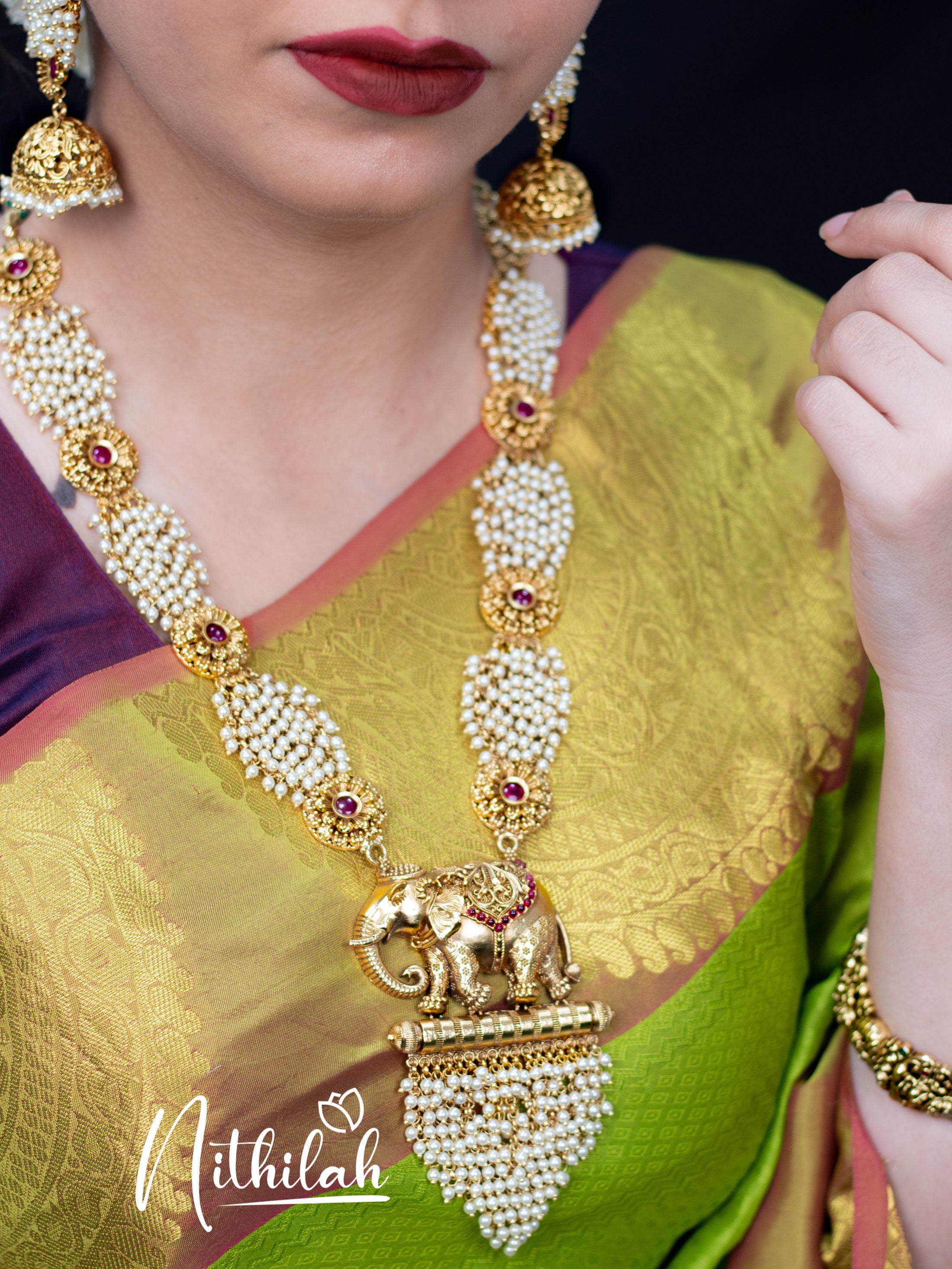
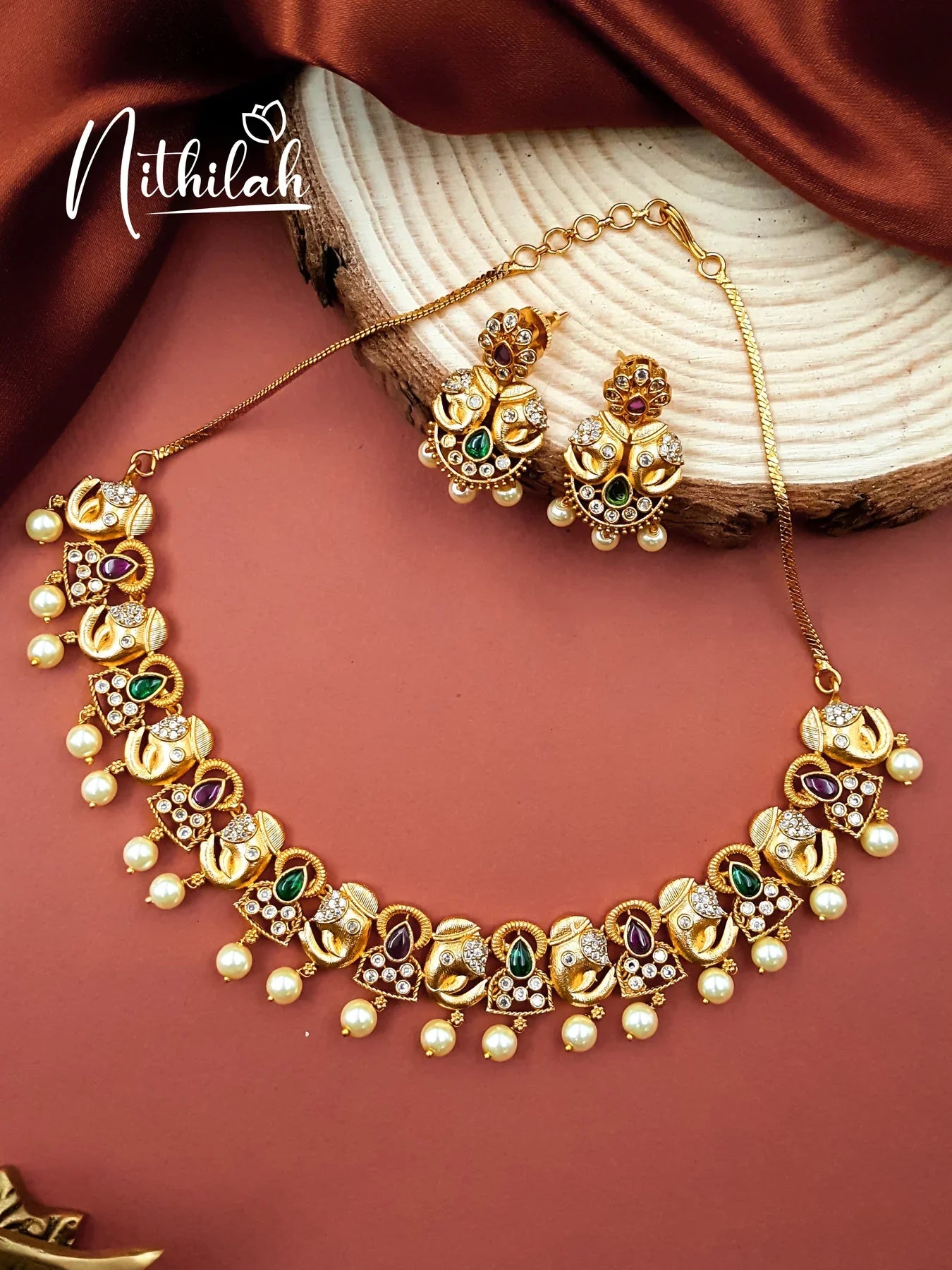
The elephant holds a special place in Indian culture, symbolising strength, wisdom, stability, and good fortune. In Temple Jewellery, elephant motifs are often incorporated into necklaces, bangles, earrings, and pendants to reflect these qualities.
Inspired by temple sculptures and royal processions, elephant carvings add a sense of grandeur and heritage to jewellery designs. Their bold appearance also creates a balanced contrast alongside intricate floral and Lakshmi motifs.
For many jewellery lovers, elephant-inspired Temple Jewellery represents protection, resilience, and the enduring spirit of Indian craftsmanship.
4. Lotus – Purity & New Beginnings
The lotus flower is one of the oldest and most meaningful symbols found in Indian art and spirituality. It represents purity, spiritual growth, and new beginnings, making it a popular motif in Temple Jewellery worn during weddings and auspicious celebrations.
These traditional motifs have been used for centuries. Learn more in 📖 The History and Spiritual Significance of Temple Jewellery.
Artisans often combine lotus patterns with Lakshmi motifs, as the goddess is traditionally depicted seated on a blooming lotus. This harmonious pairing reflects prosperity, beauty, and positive energy.
Its delicate petals also add elegance and softness to otherwise bold Temple Jewellery designs.
5. Mango (Manga Malai) – Prosperity & Fertility
The mango motif, commonly known as Manga Malai, has been a cherished design in South Indian jewellery for generations. Its distinctive curved shape symbolises prosperity, fertility, abundance, and the celebration of life.
You'll often find mango-shaped links beautifully arranged throughout long harams and traditional necklaces, creating a graceful flowing pattern that has become a signature of South Indian bridal jewellery.
Even today, Manga Malai designs remain one of the most sought-after styles for brides because they blend timeless tradition with striking elegance.
🌿 Did You Know?
Many Temple Jewellery motifs appear together in a single design. A necklace may feature Goddess Lakshmi at the centre, surrounded by lotus petals, peacocks, and mango motifs—each adding its own symbolic meaning while creating a harmonious traditional design.
6. Kemp Stones – More Than Just Colour
One of the most distinctive features of Temple Jewellery is the use of Kemp stones, traditionally seen in rich shades of red and green. The rich red and green tones of Kemp stones have become one of the defining visual characteristics of traditional Temple Jewellery. Their distinctive appearance helps preserve the classic aesthetic that jewellery lovers continue to associate with South Indian heritage.
Beyond their striking appearance, Kemp stones create a beautiful contrast against the antique gold finish, highlighting intricate carvings and divine motifs. Today, premium imitation Temple Jewellery continues this tradition, allowing jewellery lovers to enjoy the timeless beauty of classic Temple designs without compromising on elegance or affordability.
These vibrant stones are one of the reasons Temple Jewellery remains popular today.
Why These Motifs Still Matter Today
Although Temple Jewellery continues to evolve, the symbolic meanings behind its motifs remain timeless. Each design represents values that have been appreciated across generations, allowing today's jewellery lovers to choose pieces that carry both personal meaning and cultural significance.
Understanding these motifs helps people appreciate Temple Jewellery not only as a traditional ornament but also as a reflection of South India's artistic heritage.
When Choosing Temple Jewellery, Consider Which Motifs Reflect Your Occasion
✔ Lakshmi for weddings and auspicious ceremonies
✔ Lotus for new beginnings and celebrations
✔ Peacock for graceful traditional styling
✔ Elephant for heritage-inspired statement pieces
✔ Mango motifs for classic South Indian bridal jewellery
Small details often make the biggest difference in how premium a jewellery piece looks and feels.
Why Choose Nithilah?
At Nithilah, we believe every piece of Temple Jewellery should preserve the beauty of traditional artistry while meeting the expectations of today's jewellery lovers.
Our carefully curated collections feature timeless South Indian motifs, premium imitation jewellery inspired by traditional artistic heritage, and elegant antique finishes suitable for weddings, festivals, Bharatanatyam performances, gifting, and everyday traditional wear.
Why customers choose Nithilah:
✔ Authentic Temple-inspired designs.
✔ Premium imitation jewellery with intricate craftsmanship.
✔ Traditional Lakshmi, peacock, elephant, and lotus motifs.
✔ Collections for retail customers and wholesale buyers.
✔ Worldwide shipping with secure shopping.
Whether you're looking for a statement bridal necklace or a lightweight festive set, you'll find designs inspired by India's rich jewellery heritage.
Final Thoughts
The beauty of Temple Jewellery lies not only in its artistic tradition but also in the stories woven into every design. Motifs such as Goddess Lakshmi, peacocks, elephants, lotus flowers, mango patterns, and vibrant Kemp stones have been cherished for generations because they represent values deeply rooted in Indian culture.
Understanding these symbols allows you to appreciate Temple Jewellery beyond its appearance. Every necklace, earring, haram, or bangle becomes more than an ornament—it becomes a celebration of heritage, artistry, and tradition.
Whether you're choosing your first Temple Jewellery set or adding to an existing collection, knowing the meaning behind each motif helps you select designs that are both beautiful and meaningful.
⭐ Quick Summary: Temple Jewellery Motifs Explained
Temple Jewellery motifs represent much more than decorative artistry. Each traditional design carries symbolic meaning rooted in South Indian culture, spirituality, and artistic heritage. Understanding these motifs helps jewellery lovers choose pieces that reflect prosperity, wisdom, beauty, protection, and new beginnings while appreciating the traditions preserved in every design.
✨ At a Glance
✔ Lakshmi – Prosperity & abundance
✔ Peacock – Beauty & grace
✔ Elephant – Strength & wisdom
✔ Lotus – Purity & new beginnings
✔ Mango – Fertility & prosperity
✔ Kemp Stones – Traditional South Indian elegance
✔ Every motif reflects cultural symbolism
✔ Multiple motifs often appear together in one design
Frequently Asked Questions
1. What do the motifs in Temple Jewellery represent?
Temple Jewellery motifs represent traditional values such as prosperity, wisdom, beauty, purity, strength, and new beginnings. Common motifs include Goddess Lakshmi, peacocks, elephants, lotus flowers, mango patterns, and Kemp stones.
2. Why is Goddess Lakshmi commonly featured in Temple Jewellery?
Goddess Lakshmi symbolises prosperity, wealth, and abundance. Her image is considered auspicious, making it one of the most popular motifs for weddings, festivals, and religious occasions.
3. What are Kemp stones?
Kemp stones are traditional red and green stones commonly used in South Indian Temple Jewellery. They enhance the antique gold finish and add colour and elegance to traditional designs.
4. Are Temple Jewellery motifs only for religious occasions?
No. While the motifs have cultural and spiritual significance, Temple Jewellery is widely worn for weddings, festivals, Bharatanatyam performances, family functions, and other celebrations.
5. What is the significance of the peacock motif?
The peacock symbolises beauty, grace, prosperity, and elegance. It is one of the most recognisable decorative elements in Temple Jewellery.
6. Where can I buy premium Temple Jewellery online?
Explore Nithilah's curated collection of premium imitation Temple Jewellery featuring traditional South Indian motifs, intricate craftsmanship, and elegant antique finishes for every special occasion.
7. Can different Temple Jewellery motifs appear in the same design?
Yes. Many traditional Temple Jewellery pieces combine multiple motifs such as Goddess Lakshmi, peacocks, lotus flowers, elephants, and mango patterns within a single design. Together, these symbols create jewellery that reflects prosperity, beauty, protection, and cultural heritage while maintaining the classic South Indian aesthetic.


